
Gods, Gatekeeping, and the Big Screen: A Brief History of Mythology Controversies in Indian Cinema
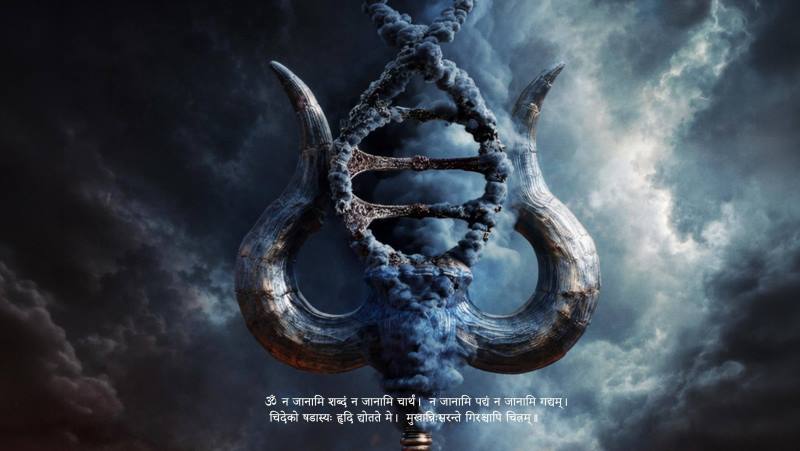
The ink hadn’t even dried on the announcement poster before it started. Jr NTR and Trivikram’s upcoming film on Lord Murugan sparked an online tug-of-war within hours of its reveal — Tamil audiences objecting to a Sanskrit-only poster and to producer Naga Vamsi’s “born in the North” caption, while others pointed to alternate tellings that place Murugan’s birth in the Himalayas before his southward journey.
It’s easy to treat this as a one-off Twitter storm. It isn’t. Indian cinema has been arguing with itself over how to depict gods, epics, and regional heritage for almost as long as it has existed. Here’s a look at how this particular kind of controversy keeps resurfacing.
The Genre is as Old as Indian Cinema itself
Mythological films were the industry’s first commercial formula. By the 1940s the pan-Indian popularity of Hindi mythologicals had declined, but Madras became a major production hub where the genre stayed dominant well into the sound era, remaining commercially viable in Telugu cinema until as late as 1980. So the genre has deep, competing regional roots — which is part of why ownership claims flare up so easily today.
The tension isn’t just about box office turf, either. Scholarship on early Tamil cinema notes that mythological films in 1920s South India were caught up in broader religious, political, and cultural debates about modernity meaning the genre has been a proxy for identity politics since its silent-film infancy, long before hashtags existed to carry the argument.
View this post on Instagram
Adipurush (2023): when “creative liberty” became a National Flashpoint
The most instructive recent case is Om Raut’s Adipurush, a Hindi retelling of the Ramayana starring Prabhas and Saif Ali Khan. The backlash began with the very first teaser and only intensified after release.
The core complaints:
- Ravana’s design was criticized for looking more like a stereotypical villain than the complex, scholarly, Shiva-devoted figure found in Valmiki’s original epic.
- Lanka itself was reimagined as a haunted, horror-movie palace instead of the grand, prosperous kingdom described in tradition, which fans felt stripped the story of its cultural richness.
- A religious body formally objected, arguing that the film’s costuming and dialogue distorted the gods’ depiction and that Hanuman in particular resembled a different cultural archetype entirely.
- Commentary at the time noted that costume choices — Ram in leather footwear, for instance — broke from traditional iconography audiences expected from temple art and older adaptations.
What makes Adipurush a useful comparison to the Murugan debate isn’t the specific complaints — it’s the pattern: a poster or teaser lands, a detail (a costume, a caption, a line of dialogue) is read as evidence of disrespect or misrepresentation, and the ensuing debate becomes bigger than the film itself. Writers covering the fallout later argued that epics can be creatively reinterpreted, but only if the retelling still feels rooted in the original’s spirit rather than borrowing visual language from unrelated genres.
The Dravidian-era critique nobody remembers citing
Long before social media, Tamil Nadu had its own organized skepticism toward mythological cinema. The Dravidian movement’s intellectual current, associated with Periyar, criticized mythological films as vehicles for Brahminical narratives rather than neutral folklore — a critique baked into Tamil film culture for decades. It’s worth remembering because it shows the “who gets to tell this story, and how” question in South Indian cinema isn’t new; it just used to be framed as a caste-and-politics argument rather than a state-pride one.
What ties these episodes together
A few recurring threads show up every time:
- A visual or textual detail becomes the flashpoint. Not the plot, not the acting — a poster’s language, a costume choice, a single tweet.
- Regional or communal identity gets layered onto religious sentiment. The argument stops being about a film and starts being about who “owns” a shared cultural figure.
- The controversy often peaks before anyone has seen the actual film. Both Adipurush and the NTR-Trivikram project drew their fiercest reactions from teasers and posters, not finished cuts.
- Commentators on all sides eventually ask for patience — and are usually ignored until the discourse cycle runs its course on its own.
Where this leaves the Murugan film
If history is a guide, the “born in the North” row will likely fade once actual footage, casting, and story details emerge — assuming the makers don’t add fuel with further ambiguous framing. But it’s also a reminder that mythological cinema in India rarely gets to be just cinema. Every costume, every caption, every line of scripture quoted in a poster is read as a statement about identity, ownership, and respect — and that scrutiny, if anything, has only intensified in the social media era.
Whether Trivikram’s team treats that scrutiny as noise to ride out or as a signal to course-correct may end up shaping the film’s reception as much as anything that happens on screen.
Catch us for latest Bollywood News, Movies Reviews, New Movie Release , and Follow us on Instagram, Twitter, Facebook