A ₹2 Crore Devotional Film Just Outlasted Big-Star Bollywood – Here’s What That Says About Audiences in 2026
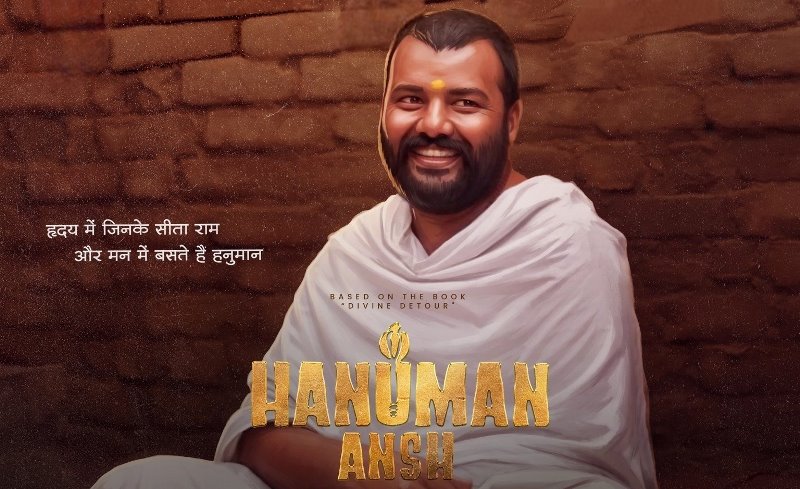
Box office weekends usually tell a simple story: big stars draw big numbers, smaller films fade quietly. This week’s results flip that script entirely. Daayra, a starry drama featuring Kareena Kapoor and Prithviraj Sukumaran, closed out its run at a mere ₹5.55 crore. Vibe struggled similarly, unable to connect with audiences in its opening week. Meanwhile, Hanuman Ansh — a devotional film made on a reported budget of just ₹2 crore, with no big stars attached — is still running strong in its seventh week, having crossed ₹300 crore domestically and over ₹366 crore worldwide. That’s not a fluke. It’s arguably the most interesting box office story of the year.
The Numbers Tell an Uncomfortable Story for Star-Driven Cinema
Daayra opened at just ₹0.90 crore on day one and never recovered, limping to a first-weekend total of ₹4.10 crore before weekday collections dropped to as little as ₹0.25 crore a day. Vibe followed a comparable pattern, opening around ₹1.80 crore and failing to build meaningful momentum through its first week. Both films had reasonably recognizable names attached and standard theatrical marketing pushes behind them. Neither found an audience.
Contrast that with Hanuman Ansh’s trajectory: an opening day of just ₹10 lakh, followed by two nearly invisible opening weeks bringing in a combined ₹1.48 crore. Then something shifted. Week three alone brought in ₹10.40 crore. Week four: ₹61 crore. Week five: an astonishing ₹90.25 crore. By day 47, the film’s global gross had climbed past ₹366 crore, placing it among the top three highest-grossing Indian films of the entire year — behind only Dhurandhar: The Revenge and Border 2.
Why a Small Devotional Film Outperformed Bigger Productions
Hanuman Ansh tells the story of Neem Karoli Baba, a revered spiritual guru, and was written, directed, and produced by Vishal Chaturvedi, himself a devotee rather than a conventional commercial filmmaker. According to industry analysis, that distinction may be the film’s single biggest advantage. Rather than building the story around commercial formulas, the film leaned into a simpler, sincerity-driven portrayal of its subject’s teachings and the faith surrounding him — an approach that resonated strongly with family audiences and spread almost entirely through word-of-mouth rather than marketing spend.
The contrast becomes even sharper when set against Shree Baba Neeb Karori Maharaj, a separate film about the same spiritual figure released earlier in 2026, starring Subodh Bhave. That film collected only around ₹0.64 crore at the box office. Two films, the same subject, wildly different outcomes — a reminder that audience connection isn’t guaranteed just because a story has built-in devotional appeal. Execution and authenticity still decide the outcome.
Part of a Bigger Pattern: Devotional Cinema’s Quiet Comeback
Hanuman Ansh isn’t an isolated case. It arrives alongside a broader resurgence of mythology and spirituality-driven films doing serious business in 2026, including the animated hit Mahavatar Narsimha and Krishnavataram Part 1, which reimagines Krishna’s story with contemporary filmmaking techniques. Together, these films suggest Indian audiences currently have a real appetite for grounded, faith-driven storytelling — an appetite that big-budget star vehicles aren’t necessarily fulfilling right now.
What This Means for How Films Get Greenlit
For an industry that has long treated star power and production budget as the primary predictors of box office success, results like this week’s are worth sitting with. Daayra and Vibe had conventional advantages — recognizable names, standard marketing rollouts — and still couldn’t hold an audience. Hanuman Ansh had almost none of those advantages and became one of the most profitable Indian films of the year purely on the strength of word-of-mouth and genuine audience connection.
That doesn’t mean star power no longer matters; plenty of star-led films still perform well. But it does suggest the margin for error has narrowed. Audiences in 2026 appear increasingly willing to reward smaller films that feel sincere, and increasingly unwilling to show up simply because a film has a familiar face on the poster.
The Takeaway
This week’s box office split isn’t really about one film winning and two losing. It’s a live demonstration of a shift already underway in Indian cinema: authenticity and word-of-mouth are proving to be more reliable box office engines than star casting and marketing budgets alone. Whatever gets greenlit next in this environment, expect studios to be watching Hanuman Ansh’s trajectory very closely.
Catch us for latest Bollywood News, Movies Reviews, New Movie Release , and Follow us on Instagram, Twitter, Facebook