
Alia Bhatt’s Powerful Stand: When Celebrity Privacy Crosses the Line
The glitz and glamour of Bollywood often comes with a price – the constant scrutiny of public life. But when does media attention cross from professional coverage into personal invasion? Bollywood superstar Alia Bhatt recently reminded us all where that line should be drawn with a heartfelt message about privacy, consent, and basic human dignity.
The Mumbai Incident: A Wake-Up Call
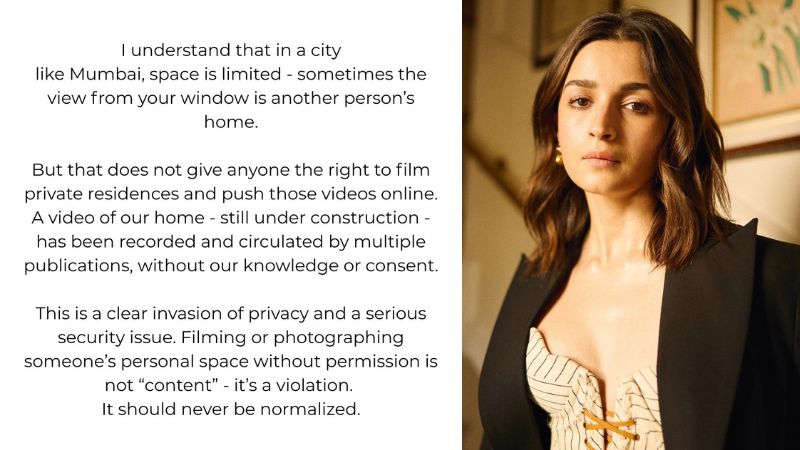
In her candid social media posts, Alia Bhatt shared a troubling experience that many celebrities face but rarely discuss openly. Videos of her private residence, still under construction, were recorded and circulated across multiple publications without her knowledge or consent. The incident highlights a growing concern in today’s digital age where private moments can instantly become public content.
“Think about it: would you tolerate videos of the inside of your home being shared publicly, without you knowing? None of us would,” she wrote, striking at the heart of the matter with a simple yet powerful question that resonates with everyone.
View this post on Instagram
Understanding the Context: Life in Mumbai’s Dense Landscape
Alia acknowledged the unique challenges of living in a bustling metropolis like Mumbai, where space is at a premium and privacy can be hard to come by. She wrote, “I understand that in a city like Mumbai, space is limited – sometimes the view from your window is another person’s home.”
This understanding shows her empathy for the complexities of urban living while maintaining her stance that proximity doesn’t equal permission. The actress made it clear that physical closeness doesn’t justify crossing ethical boundaries when it comes to documenting someone’s private space.
A Clear Message: Privacy is Not Negotiable
The actress didn’t mince words when addressing what she sees as a serious violation. “This is a clear invasion of privacy and a serious security issue,” she stated. “Filming or photographing someone’s personal space without permission is not ‘content’ – it’s a violation. It should never be normalized.”
Her message serves as both a personal plea and a broader commentary on digital ethics in the social media age. By calling it what it is – a violation rather than content creation – she’s challenging the normalization of intrusive behavior that’s often justified under the banner of celebrity culture.
An Appeal to Conscience: The Role of Media and Public
What makes Alia’s response particularly noteworthy is her approach to addressing the issue. Rather than resorting to harsh criticism, she made what she called “a humble but firm request.” She urged people who encounter such content online not to forward or share it further, recognizing that the spread of invasive content often depends on public participation.
Her message to media outlets was equally direct: “I urge you to take them down immediately.” This appeal demonstrates her understanding that stopping privacy violations requires collective responsibility from both media professionals and the general public.
The Bigger Picture: Celebrity Rights in the Digital Age
Alia Bhatt’s stance opens up important conversations about the rights of public figures in an increasingly connected world. While celebrities choose to be in the public eye professionally, this doesn’t extend an open invitation to document their private moments without consent.
The incident reflects broader questions about digital ethics, including how we define public versus private spaces, what constitutes fair coverage of celebrities, and the responsibility of both creators and consumers of such content.
Industry Support and Social Impact
The entertainment industry has historically struggled with balancing public interest and personal privacy. Alia’s decision to speak out publicly about this violation represents a growing trend of celebrities taking a stand against invasive practices rather than silently accepting them as part of fame.
Her message resonates beyond Bollywood, touching on universal themes of respect, consent, and human dignity that apply regardless of one’s profession or public status.
Setting Boundaries: A Call for Respect
The actress’s response demonstrates how public figures can address privacy violations while maintaining professionalism and grace. By explaining the impact of such actions and appealing to people’s sense of empathy, she’s created a template for addressing similar situations without escalating conflicts.
Her approach shows that setting boundaries doesn’t require aggression or hostility – sometimes, a clear explanation of why something matters is the most powerful response.
The Path Forward: Digital Responsibility
As social media continues to blur the lines between public and private life, Alia Bhatt’s message serves as a timely reminder about digital responsibility. Her experience highlights the need for clearer guidelines about what constitutes appropriate coverage of public figures and what crosses into invasion of privacy.
The incident also underscores the importance of consent in content creation and sharing, principles that apply whether the subject is a celebrity or an ordinary citizen.
Also Read: From Crown to Cinema: Manasa Varanasi’s Inspiring Journey from Miss India to Bollywood
Conclusion: More Than Just a Celebrity Issue
While Alia Bhatt’s experience stems from her status as a public figure, the principles she’s advocating for extend far beyond celebrity culture. In an age where anyone can become the subject of viral content without their consent, her message about privacy, respect, and digital ethics speaks to universal concerns about how we treat one another in the digital space.
Her thoughtful response to a violation of privacy serves as both a personal boundary-setting exercise and a broader educational moment about the importance of consent, respect, and basic human dignity in our increasingly connected world.
Catch us for latest Bollywood News, Movies Reviews, New Movie Release , and Follow us on Instagram, Twitter, Facebook