
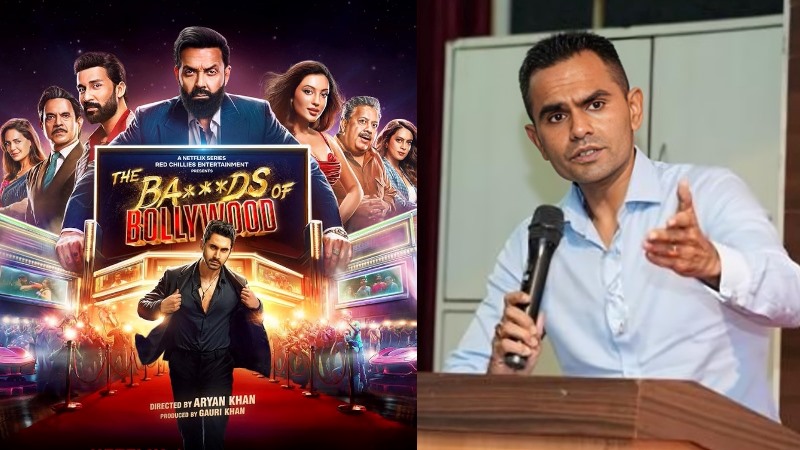
Former NCB Officer Takes on Netflix: Sameer Wankhede Files Defamation Suit Over Bollywood Series
The entertainment industry finds itself at the center of another legal controversy as former Narcotics Control Bureau (NCB) officer Sameer Wankhede has filed a defamation lawsuit against streaming giant Netflix and production house Red Chillies Entertainment. The case, filed in Delhi High Court on September 25, 2025, revolves around the recently released series “The Ba**ds of Bollywood,” marking yet another intersection between real-life events and fictional storytelling in Indian entertainment.
The Spark That Ignited the Legal Battle
The controversy stems from Netflix’s latest drama series “The Ba**ds of Bollywood,” which premiered on September 18, 2025. What makes this case particularly intriguing is that the series marks the directorial debut of Aryan Khan, son of Bollywood superstar Shah Rukh Khan, and is produced by Red Chillies Entertainment, owned by Shah Rukh and Gauri Khan.
The series allegedly draws inspiration from the high-profile 2021 drug bust case that involved Aryan Khan himself, where Wankhede served as the key arresting officer during his tenure at the NCB. This real-life connection between the content creator and the subject matter has added layers of complexity to an already sensitive situation.
Understanding the Legal Claims
Wankhede’s lawsuit presents several serious allegations against the streaming platform and production house. He contends that the series portrays him and anti-drug enforcement agencies in what he describes as a “false, malicious, and defamatory” manner. According to his legal filing, the show deliberately attempts to damage his professional reputation while undermining public confidence in law enforcement institutions.
The Constitutional Concern
Beyond personal defamation claims, Wankhede has raised a constitutional issue that could have broader implications. He specifically objects to a scene where a character displays the middle finger immediately after uttering “Satyamev Jayate” – the national motto inscribed on India’s national emblem. This action, according to his lawsuit, constitutes a violation of the Prevention of Insults to National Honour Act, 1971, adding a layer of national sensitivity to the case.
The Financial and Social Demands
The former NCB officer is seeking Rs 2 crore (approximately $240,000 USD) in damages, but with an interesting humanitarian twist. Rather than seeking personal compensation, Wankhede has specifically requested that any awarded damages be donated to Tata Memorial Cancer Hospital for cancer patient treatment. This philanthropic approach to the lawsuit adds a unique dimension to what could have been a purely monetary dispute.
Additionally, he is pursuing a permanent injunction that would halt any further distribution or promotion of the series, along with a court declaration officially recognizing the content as defamatory.
The Broader Cast of Defendants
The lawsuit extends beyond the primary entertainment entities, encompassing major technology platforms that facilitate content distribution and discussion. The defendants include:
– Red Chillies Entertainment (Shah Rukh and Gauri Khan’s production house)
– Netflix (the streaming platform)
– X Corp (formerly Twitter)
– Google LLC
– Meta Platforms Inc. (Facebook’s parent company)
– RPG Lifestyle Media Pvt Ltd
This comprehensive approach suggests Wankhede is targeting not just the content creators but also the platforms that enable widespread distribution and discussion of the allegedly defamatory material.
The Timing Factor
An important aspect of this case is the timing consideration. Wankhede emphasizes that the Aryan Khan drug case remains sub-judice in Indian courts, meaning it’s still under judicial consideration. This ongoing legal status, he argues, makes any fictional portrayal of the events inappropriate and potentially prejudicial to the legal proceedings.
The fact that the series was released while court proceedings are still pending raises questions about the ethics of dramatizing real, ongoing legal cases for entertainment purposes.
Public Response and Social Media Buzz
The filing has generated significant discussion across social media platforms, with many users noting the ironic nature of the situation. The involvement of Aryan Khan as the director of a series that allegedly references his own legal troubles has not gone unnoticed by the online community.
This public discourse highlights the complex relationship between entertainment content and real-life events, especially when those events involve high-profile personalities and ongoing legal proceedings.
Industry Implications
This case could set important precedents for the Indian entertainment industry regarding the adaptation of real-life events into fictional content. The outcome may influence how streaming platforms and production houses approach sensitive, ongoing legal matters in their content creation processes.
The involvement of major technology platforms as defendants also signals a potential shift in how courts view the responsibility of digital platforms in content distribution and the amplification of allegedly defamatory material.
Looking Ahead
As of now, the Delhi High Court has yet to schedule hearings or issue any preliminary rulings on the matter. The case’s progression will likely be closely watched by both the entertainment industry and legal professionals, given its potential to establish new guidelines for content creation based on real events.
The resolution of this dispute may also influence future collaborations between streaming platforms and production houses when dealing with content that intersects with ongoing legal proceedings or involves real-life personalities and events.
Conclusion
The defamation suit filed by Sameer Wankhede against Netflix and Red Chillies Entertainment represents more than just a legal dispute between individuals. It raises fundamental questions about the boundaries between entertainment and reality, the responsibility of content creators when dealing with sensitive subject matter, and the role of digital platforms in content distribution.
As the case unfolds in the Delhi High Court, it will likely provide important insights into how Indian courts balance creative freedom with personal reputation rights, especially when real-life events and ongoing legal proceedings are involved. The entertainment industry will be watching closely to understand the implications for future content creation strategies.
The outcome of this case could reshape how streaming platforms and production houses approach the adaptation of real-life events, particularly those involving high-profile personalities and sensitive legal matters still under judicial review.
Latest Media Interview of Sameer Wankhede
#WATCH | Mumbai: On ‘Bads of Bollywood’ series, Former Mumbai NCB Zonal Director Sameer Wankhede says, “I won’t comment on all this. I’ll just say one thing: Satyamev Jayate.”
“In our Mumbai area, the issues of drug consumption, and especially in Northern Mumbai or Eastern… pic.twitter.com/4oGMnyYQVX
— ANI (@ANI) September 27, 2025
Catch us for latest Bollywood News, Movies Reviews, New Movie Release , and Follow us on Instagram, Twitter, Facebook