
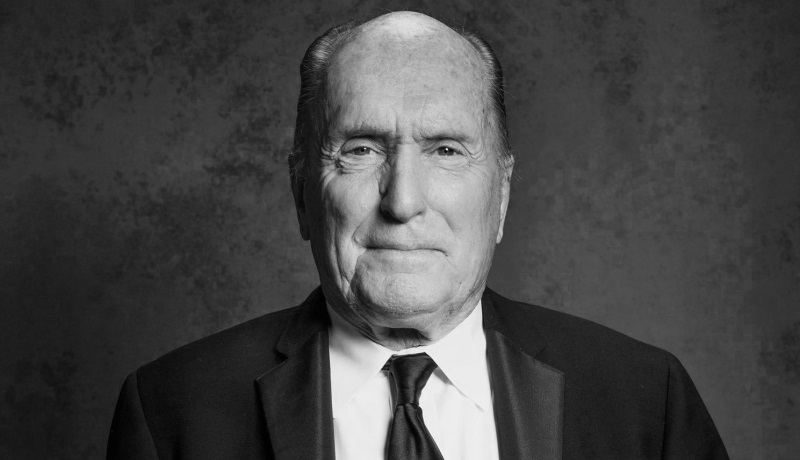
Hollywood Loses a Legend: Robert Duvall Dead at 95 — The World Mourns
On a quiet Sunday evening in Middleburg, Virginia, one of the greatest actors in the history of American cinema drew his final breath. Robert Duvall — the seven-time Oscar nominee, one-time Oscar winner, and the beating heart of some of the most unforgettable films ever made — died peacefully at home on February 15, 2026. He was 95 years old. Within hours, a stunned Hollywood came flooding to social media with tributes that read less like press releases and more like letters to a lost father. This is the story of the man, the myth, and what he meant to movies — and to us.
The Announcement That Stopped Hollywood in Its Tracks
It was a Monday morning when the post appeared on Robert Duvall’s official Facebook page — written not by a publicist, but by the woman who loved him most. His wife, Luciana Duvall, shared the news in the most human way possible, painting a portrait of a man who gave everything to his characters and gave the rest to the people around him.
“Bob passed away peacefully at home, surrounded by love and comfort. To the world, he was an Academy Award-winning actor, a director, a storyteller. To me, he was simply everything.” — Luciana Duvall, wife of Robert Duvall
His family asked fans not to hold a formal service. Instead, in a request that felt entirely in the spirit of the man himself, they encouraged the world to honor him by “watching a great film, telling a good story around a table with friends, or taking a drive in the countryside to appreciate the world’s beauty.” Even in death, Duvall managed to be more eloquent than most people are in life.
Six Decades, One Unbroken Standard of Excellence
There are actors who become famous. There are actors who become stars. And then there are actors like Robert Duvall — rare, once-in-a-generation figures who become synonymous with the craft itself. Born in 1931 to a Rear Admiral father and a mother said to be distantly related to General Robert E. Lee, Duvall carried a kind of quiet authority in everything he did on screen. His classmates at the legendary Neighborhood Playhouse School of the Theatre included Dustin Hoffman and James Caan — a fact that tells you everything about the generation of talent he was forged alongside.
He appeared in over 90 films during a career that stretched nearly six decades. His first real breakthrough came as the ghostly Boo Radley in the 1962 classic To Kill a Mockingbird — a role he landed after playwright Horton Foote spotted him in an off-Broadway production years earlier. The same Horton Foote would later write the film that earned Duvall his one and only Academy Award.
Robert Duvall — Career Highlights At a Glance:
- 1962: Boo Radley — To Kill a Mockingbird
- 1972: Tom Hagen (The Consigliere) — The Godfather
- 1979: Lt. Col. Kilgore — Apocalypse Now (BAFTA winner)
- 1983: Mac Sledge — Tender Mercies (Academy Award, Best Actor)
- 1997: Wrote, directed, and starred in The Apostle
- 2014: The Judge (Oscar nominated)
“He Could Do It All With His Eyes” — The Art of Robert Duvall
What made Duvall so extraordinary was something critics struggled to fully put into words — and maybe that’s because it wasn’t about technique in any traditional sense. Roger Ebert once said of him that his performances were “mostly done with his eyes.” That economy of expression — the ability to convey coiled fury, broken vulnerability, or quiet grace without a single wasted gesture — is what separated Duvall from almost everyone who came before or after him.
His Tom Hagen in The Godfather is one of cinema’s great supporting performances: cool, calculating, fiercely loyal, and somehow deeply human all at once. His Lieutenant Colonel Kilgore in Apocalypse Now gave us one of the most quoted lines in movie history. And then came Tender Mercies — a quietly devastating portrait of a broken country singer finding redemption — and with it, the Oscar that the Academy had long owed him.
What’s remarkable is that he could just as easily have won for a dozen other films. The Great Santini. The Conversation. The Apostle — which he wrote and directed himself. Crazy Heart. Network. Each one a performance that, in another actor’s filmography, would be the crowning achievement. For Duvall, they were just another Tuesday.
A Hollywood Shattered: The Tributes Pour In
By the time Monday morning arrived in Los Angeles, the tributes were coming faster than any entertainment wire could keep up with. Al Pacino and Robert De Niro — both of whom shared the screen with Duvall in the Oscar-winning Godfather Part II — released personal statements. Francis Ford Coppola, who directed him in two of the greatest films ever made, called the news “a blow.” Stephen King simply tweeted the most famous line Duvall ever delivered on film. No other context was needed.
Al Pacino:
“It was an honor to have worked with Robert Duvall. He was a born actor — his connection with the craft, his understanding and his phenomenal gift will always be remembered. I will miss him.”
Robert De Niro:
“God bless Bobby. I hope I can live till I’m 95. May he Rest in Peace.”
Francis Ford Coppola:
“What a blow to learn of the loss of Robert Duvall.”
Stephen King:
“I love the smell of napalm in the morning!” RIP Robert Duvall.
Lynda Carter:
“Robert Duvall was a kind and gentle man. He had that crinkle in his smile that made you think he had some precious secret, all his own. Rest well, Robert.”
SAG-AFTRA:
“We celebrate the legacy of Robert Duvall, a true acting legend whose work shaped generations. Twice honored with SAG-AFTRA Actor Awards, his influence on the craft will endure.”
The Man Behind the Roles: A Love Story Worthy of the Screen
What many people don’t know about Robert Duvall is that his greatest late-life story wasn’t a film role — it was a love story that played out in a Buenos Aires bakery. In his 60s, Duvall traveled to Argentina to pursue his lifelong passion for the tango. While trying to buy flowers for a woman he’d met, he discovered the flower shop was closed. He ducked into a nearby bakery instead — and there he met Luciana Pedraza, the Argentine woman who would become his wife and his companion for the rest of his life.
As Duvall himself once said of the tango: “When you dance fast, you have to think slow.” It was a philosophy he seemed to carry into everything — into his marriages, his craft, and the long, graceful arc of a life lived on his own terms. He leaves behind not just a body of work, but a testament to what it looks like to age with dignity, passion, and an undiminished love of the world.
What Robert Duvall Leaves Behind — And Why It Matters Now
In an industry that constantly chases the next thing, the next franchise, the next streaming sensation, the passing of Robert Duvall is a reminder of something that feels increasingly rare: the actor who simply disappears into the work. No persona, no brand, no carefully curated public image. Just the character. Just the truth of the human spirit, as his wife so beautifully put it.
His was a career that ran from To Kill a Mockingbird to The Judge — from the civil rights era to the social media age — and across all of it, the quality never wavered. He was the support beam, as one critic put it, of the entire American film movement of the 1970s. The decade that gave us The Godfather, Chinatown, and Taxi Driver was also the decade in which Robert Duvall proved, again and again, that there was no supporting actor in Hollywood who could touch him.
He didn’t chase the spotlight. The spotlight found him — because every single time he walked into a scene, something true and irreducible happened on screen that made it impossible to look anywhere else.
Streaming queues across the world will be a little different this week. The Godfather will climb the charts. Tender Mercies will find a new generation of viewers who’ve never seen it. Someone, somewhere, will discover The Apostle for the first time and wonder how it’s possible that one person could write, direct, and act a performance that good all by themselves.
That’s the legacy Robert Duvall leaves behind. Not awards — though there were plenty. Not fame — though it followed him wherever he went. But films. Real, enduring, irreplaceable films that will be watched as long as people care about what human beings can do when a camera rolls and the world goes quiet.
Robert Selden Duvall, 1931–2026. He did not want a formal service. His family has asked that you watch a great film in his honor.
Catch us for latest Bollywood News, Movies Reviews, New Movie Release , and Follow us on Instagram, Twitter, Facebook