
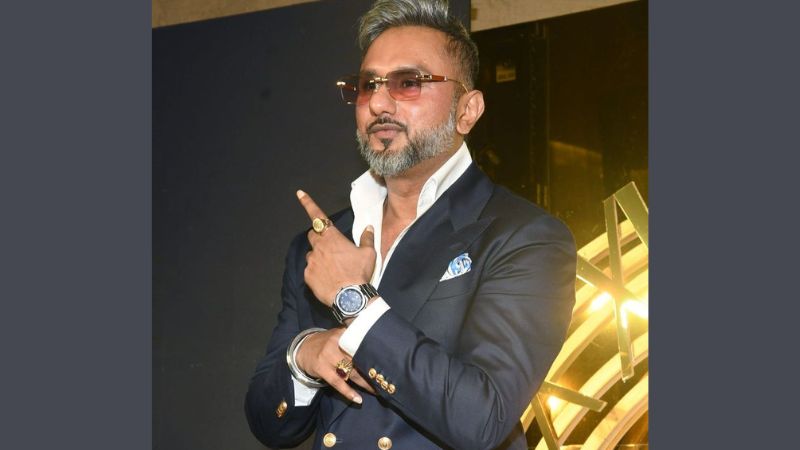
From Silence to Spotlight: Yo Yo Honey Singh’s Raw and Brave Battle with Bipolar Disorder
There was a time when Yo Yo Honey Singh was everywhere — his beats blaring from car stereos, his hooks stuck in every Bollywood party playlist, his name synonymous with high-energy rap anthems. And then, almost overnight, he vanished.
No concerts. No releases. No social media updates. Just silence.
For nearly 18 months, one of India’s biggest rap icons dropped off the face of the entertainment world. Rumours swirled. Speculation ran wild. Fans were confused, and the media had a field day guessing what had really happened to the man behind Angrezi Beat, Blue Eyes, and Love Dose.
The truth, it turned out, was something far more serious — and far more human — than anyone had imagined.
The Disappearance That No One Could Explain
When a celebrity goes quiet in today’s hyper-connected world, people notice fast. And with Honey Singh, the absence was deafening. He had been at the peak of his career — collaborating with Bollywood’s biggest names, headlining festivals, and racking up millions of streams — when he suddenly stepped away from it all.
The gossip mill churned out its share of theories. Rehab. Feuds. A fallout with the industry. But the real answer wasn’t a controversy — it was a diagnosis.
Honey Singh had been battling bipolar disorder, and nobody around him fully understood what that meant at first.
A Diagnosis That Took Time to Arrive
Bipolar disorder doesn’t always announce itself clearly. It can wear the mask of mood swings, erratic behaviour, reckless choices, and emotional extremes — things that, in the entertainment world, can easily be mistaken for an artist’s eccentricity or the toll of fame.
For Honey Singh, the road to the correct diagnosis was long and painful. He went through multiple misdiagnoses before doctors finally identified what he was dealing with. His sister Sneha later revealed that the family had no prior awareness of bipolar disorder. It was only when Honey Singh began showing visible symptoms that his loved ones scrambled to educate themselves about the condition.
That moment of recognition — of finally putting a name to the chaos — was both a relief and a reckoning.
Alcohol Was Fuelling the Fire
Alongside the mental health struggle, Honey Singh was also dealing with alcoholism, and the two were dangerously intertwined. Excessive drinking was actively worsening his bipolar symptoms, creating a vicious cycle that was difficult to break without professional help.
He eventually sought treatment at a rehabilitation centre, where he worked on weaning himself off alcohol and learning healthier ways to cope with stress and emotional turbulence. It was a gruelling process — one that required him to confront not just the substance dependency, but the deeper emotional wounds underneath.
Medication was also prescribed to stabilise his mood and ease the depressive episodes that came with the disorder. Alongside that, therapy helped him build a more grounded understanding of his own mental health and how to manage it on a day-to-day basis.
The People Who Held Him Together
Recovery rarely happens in isolation, and Honey Singh’s journey was no different. Throughout the darkest stretch of his life, his family stood firmly by his side.
His wife, Shalini Singh, was a constant source of strength. Honey Singh has spoken openly about his gratitude for her unwavering support during a period when many would have looked the other way. His sister Sneha, too, played a quiet but crucial role — educating herself about the disorder and helping the family understand what their loved one was truly going through.
That kind of support system — people who chose to learn rather than judge — made all the difference.
Why He Chose to Speak Up
Coming out publicly about a mental health struggle is never easy, especially in India’s entertainment industry, where image is everything and vulnerability can be weaponised. So why did Honey Singh choose to open up?
His answer was disarmingly simple.
“As an artist, I believe that I am not my own property. I am the property of my fans. So I thought that they deserve to know about what exactly happened to me.”
It wasn’t a PR move. It wasn’t damage control. It was a man who genuinely felt a sense of responsibility toward the people who had supported him through his career — and who believed honesty was the only way to honour that relationship.
The New Chapter: Slower, Steadier, Stronger
Post-recovery, Honey Singh’s life looks quite different from the whirlwind it once was. He has quit drinking entirely. He exercises regularly. He takes on shows and performances at a more deliberate, measured pace — one that prioritises his wellbeing over the relentless grind of the music industry.
It’s a lifestyle shift that speaks volumes. The hustle culture that dominates both Bollywood and corporate India — the constant pressure to produce, perform, and stay relevant at all costs — was part of what drove him to the breaking point. His recovery has, in many ways, been a quiet rebellion against that pressure.
A Story That Goes Beyond One Man
Honey Singh’s journey matters for reasons that stretch far beyond his personal story. In a country where mental health is still whispered about rather than discussed openly, and where seeking professional help carries a stigma that few are willing to challenge, his willingness to speak out is genuinely significant.
Bipolar disorder is more common than most people realise, and it remains widely misunderstood. Many individuals live with the condition for years without ever receiving the right diagnosis — precisely because awareness is so limited. By sharing his experience, Honey Singh has helped put a human face on a condition that is often reduced to stereotypes or dismissed entirely.
His message to anyone struggling is clear: it is okay to ask for help. It is not weakness. It is, in fact, the bravest thing you can do.
Final Thoughts
Yo Yo Honey Singh’s story is one of the most powerful mental health narratives to emerge from Indian pop culture in recent years. It is a story about the cost of silence, the courage it takes to be vulnerable, and the long, unglamorous road to recovery.
He didn’t return to the spotlight with a grand comeback single or a headline-grabbing interview. He returned quietly, steadily, and honestly — as someone who had stared down his demons and was still standing.
And in a world that rarely rewards stillness or self-care, that might just be his most impressive performance yet.
Catch us for latest Bollywood News, Movies Reviews, New Movie Release , and Follow us on Instagram, Twitter, Facebook